Introduction
Buying a car is about more than appearance, performance, and comfort. Safety should be one of the most important factors in your decision. Modern vehicles offer advanced systems that can prevent crashes, reduce injuries, and protect passengers during emergencies. Therefore, understanding the Top Automobile Safety Features Every Buyer Should Consider can help you choose a vehicle with greater confidence.
Safety technology has changed significantly over the years. Features that were once available only in expensive vehicles are now common across many models. However, not every safety system works in the same way. Some features help prevent collisions, while others protect occupants when an accident occurs.
For this reason, buyers should look beyond a simple safety rating. It is important to understand what individual features do and how they support everyday driving. A well-equipped vehicle can provide valuable assistance without replacing careful driving.
Why Automobile Safety Features Matter
Road conditions can change within seconds. A driver may face sudden braking, poor visibility, distracted road users, or unexpected obstacles. In these situations, safety technology can provide an additional layer of protection.
The best systems work quietly in the background. They monitor the road, alert the driver, or automatically respond when necessary. As a result, these features can reduce the likelihood or severity of certain accidents.
Still, technology should never encourage drivers to become careless. Safety systems are designed to assist attentive drivers. They cannot eliminate every road risk.

When comparing vehicles, consider both active and passive protection. Active features help prevent crashes. Passive features help protect occupants when crashes happen.
Automatic Emergency Braking
Automatic emergency braking is among the most valuable modern safety features. It uses sensors or cameras to detect potential collisions ahead. If the system identifies an imminent impact, it can warn the driver.
When the driver does not respond quickly enough, the system may apply the brakes automatically. Depending on the vehicle, it can help reduce impact speed or prevent some collisions entirely.
This technology is particularly useful in heavy traffic. It can also provide additional protection against certain pedestrian or cyclist collisions. However, performance varies between vehicle models and road conditions.
Buyers should check which objects the system can recognize. They should also determine whether pedestrian and cyclist detection is included.
Forward Collision Warning
Forward collision warning works closely with automatic emergency braking. Instead of applying the brakes, it primarily alerts the driver about a possible frontal collision.
The warning may appear on the dashboard. Some vehicles also provide audible or visual alerts. Others use steering-wheel vibrations to attract attention.
This feature can be especially helpful when traffic suddenly slows. It gives the driver another opportunity to react before a collision becomes unavoidable.
However, drivers should understand that warnings are not always perfectly accurate. Weather, road conditions, and sensor limitations can affect performance.
Lane Departure Warning and Lane Keeping Assistance
Unintentional lane departures can create serious risks. Lane departure warning systems monitor road markings and alert drivers when their vehicle begins leaving its lane.
Lane keeping assistance can go one step further. It may provide gentle steering input to help guide the vehicle back toward the lane.
These features can be useful during long journeys. They may also help when a driver becomes briefly distracted or loses concentration.
Nevertheless, lane systems should not be treated as self-driving technology. Drivers must remain responsible for steering and maintaining awareness.
Blind Spot Monitoring
Blind spots can make lane changes difficult, especially on busy roads. Blind spot monitoring uses sensors to detect vehicles that may not be visible through the mirrors.
When another vehicle enters the monitored area, the system can provide a warning. Many cars display a small indicator near the side mirror.
Some advanced systems also provide additional warnings when the driver activates the turn signal. This can help prevent dangerous lane-change attempts.
Even with this technology, drivers should continue checking their mirrors and blind spots manually. A sensor is an aid, not a replacement for observation.
Rear Cross-Traffic Alert
Reversing from a parking space can create unexpected hazards. Drivers may have limited visibility because of nearby vehicles, walls, or other obstacles.
Rear cross-traffic alert helps by detecting approaching vehicles from the sides. It can warn the driver when traffic is crossing behind the vehicle.
This feature is particularly useful in crowded parking areas. It can provide an extra warning when the driver’s view is restricted.
Some vehicles combine rear cross-traffic alert with automatic braking. Buyers should check whether their chosen model includes this additional capability.
Adaptive Cruise Control
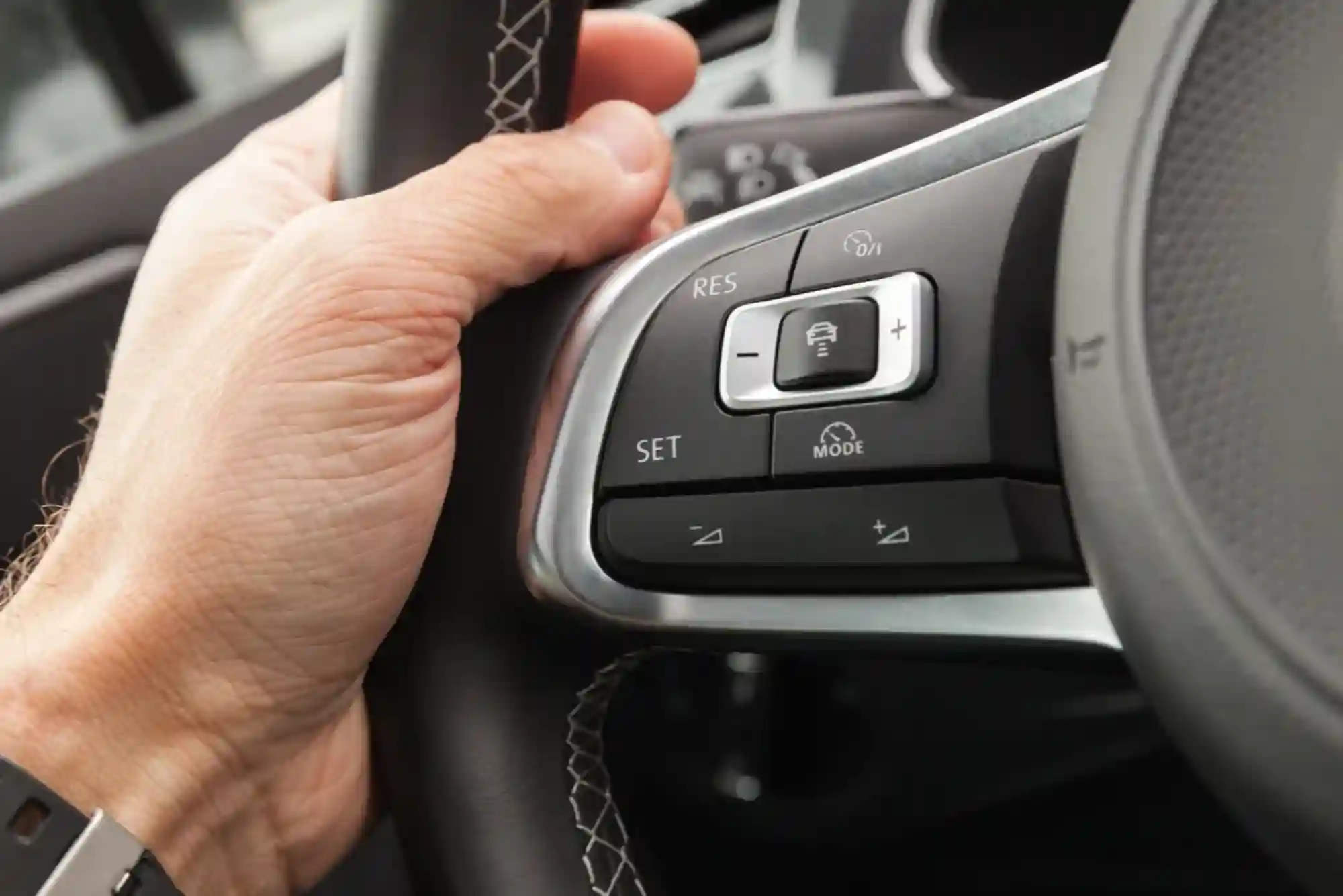
Traditional cruise control maintains a selected speed. Adaptive cruise control adds another layer of assistance by monitoring traffic ahead.
When the vehicle approaches slower traffic, the system can reduce speed. It can then increase speed again when the road becomes clear.
This makes adaptive cruise control useful on highways and during long journeys. It can reduce the need for constant speed adjustments.
However, drivers must still monitor traffic closely. System capabilities differ, especially in stop-and-go conditions. Therefore, buyers should understand the exact operating limits.
Electronic Stability Control
Electronic stability control is an important safety system that helps maintain vehicle stability. It can detect when the vehicle begins to lose directional control.
The system may automatically apply individual brakes. It can also reduce engine power when necessary.
This technology is especially valuable during sudden maneuvers. It can help drivers maintain control during slippery conditions or emergency steering.
Because stability control operates automatically, drivers may not notice it working. Nevertheless, it can provide an important layer of protection during critical situations.
Traction Control
Traction control helps reduce wheel spin when tires lose grip. The system monitors wheel movement and responds when excessive spinning occurs.
It can be useful when accelerating on wet, icy, or loose surfaces. By managing wheel spin, it helps the vehicle maintain better traction.
Traction control is especially useful in regions that experience changing weather conditions. Still, appropriate tires and sensible driving remain essential.
Airbags and Advanced Restraint Systems
Airbags are among the most recognizable passive safety features. Modern vehicles can include several airbags positioned around the passenger compartment.
Depending on the model, protection may include front, side, curtain, and knee airbags. These systems are designed to reduce injury during certain collisions.
Seat belts remain equally important. Modern restraint systems may include pretensioners and load limiters. These technologies help manage occupant movement during a crash.
Buyers should therefore consider the complete restraint system rather than focusing only on the number of airbags.
Anti-Lock Braking System
An anti-lock braking system helps prevent wheels from locking during hard braking. This allows the driver to maintain steering control while braking forcefully.
ABS can be particularly valuable during emergency stops. It may help drivers steer around an obstacle while reducing speed.
Many modern vehicles combine ABS with electronic stability and traction systems. Together, these technologies can improve vehicle control.
However, ABS does not guarantee a shorter stopping distance in every situation. Tire condition, road surface, speed, and driver reaction still matter.
Tire Pressure Monitoring System
Proper tire pressure has a direct relationship with vehicle safety. A tire pressure monitoring system alerts drivers when tire pressure falls below an appropriate level.
Underinflated tires can affect handling, braking, fuel efficiency, and tire wear. In some cases, they can also contribute to tire failure.
A monitoring system makes it easier to identify pressure problems early. Nevertheless, drivers should still inspect their tires regularly.
Rearview Camera and Parking Sensors
Rear visibility is another important consideration when buying a vehicle. Rearview cameras provide a clearer view behind the vehicle while reversing.
Parking sensors can provide additional information about nearby objects. They typically produce audible warnings as the vehicle approaches an obstacle.
Together, these technologies can make parking easier and safer. They are particularly helpful in tight spaces.
However, cameras and sensors have limitations. Drivers should continue checking their surroundings and watching for pedestrians.
High-Quality Headlights
Lighting technology is often overlooked when buyers compare safety features. Good headlights can significantly improve visibility at night and during poor weather.
Modern vehicles may use LED, adaptive, or automatic high-beam systems. Some advanced headlights can adjust their lighting pattern based on traffic conditions.
Better visibility gives drivers more time to identify hazards. Therefore, headlights deserve attention during a vehicle inspection.
A useful approach is to test the vehicle at night when possible. Buyers can then assess illumination quality more realistically.
Driver Monitoring Systems
Driver monitoring technology is becoming increasingly common. These systems can detect signs that a driver may not be paying adequate attention.
Some systems use cameras to monitor head position or eye movement. They may issue alerts when prolonged distraction or inattentiveness is detected.
This technology can be valuable during long trips. However, it should complement responsible driving rather than encourage drivers to rely on automation.
Crash Test Ratings and Safety Technology
Individual features are important, but buyers should also examine overall crash performance. Independent safety organizations conduct crash tests to evaluate vehicle protection.
These assessments can provide useful information about occupant protection and crash avoidance technology. However, ratings can vary between testing programs.
Therefore, buyers should review current safety results for the exact vehicle and model year. A vehicle with strong crash protection and effective driver-assistance technology can offer a more complete safety package.
How to Choose the Right Safety Features
Not every buyer needs exactly the same technology. Driving environment should influence the decision.
Urban drivers may benefit greatly from automatic emergency braking, pedestrian detection, blind spot monitoring, and rear cross-traffic alerts. Highway drivers may place greater value on adaptive cruise control and lane assistance.
Families should pay close attention to airbags, seat-belt systems, child-seat compatibility, and rear-seat protection. Buyers in areas with challenging weather should also consider stability control, traction control, and strong lighting.
Most importantly, understand how each system operates. Read the owner’s manual and test the vehicle before purchasing it.
Common Questions About Automobile Safety Features
What is the most important safety feature in a car?
There is no single feature that provides complete protection. Seat belts, airbags, electronic stability control, and automatic emergency braking all serve different purposes. A combination of strong crash protection and effective prevention technology is generally the best approach.
What safety features should I look for when buying a car?
Buyers should consider automatic emergency braking, forward collision warning, blind spot monitoring, lane assistance, electronic stability control, airbags, ABS, rearview cameras, and tire pressure monitoring. Crash-test performance should also be part of the decision.
Are advanced safety features worth paying for?
They can be worthwhile when they address risks common to your driving environment. However, buyers should understand their limitations before paying extra. Safety technology works best when combined with attentive driving and proper vehicle maintenance.
Which car safety feature prevents accidents?
Several systems can help prevent or reduce crashes. Automatic emergency braking, electronic stability control, blind spot monitoring, and lane assistance are examples. Their effectiveness depends on the situation and the technology used.
Discover useful ideas, fresh insights, and practical information with All Top Trend. The platform brings together engaging content across popular topics, helping readers stay informed about new developments, helpful tips, and emerging trends. Whether you are exploring everyday advice or looking for something interesting to read, All Top Trend offers accessible content designed for modern readers. Visit the website to explore its latest articles and discover valuable information in one convenient place.
Conclusion
Choosing a safe vehicle requires more than checking its appearance or engine performance. The Top Automobile Safety Features Every Buyer Should Consider can help prevent collisions, improve vehicle control, and protect occupants during crashes.