

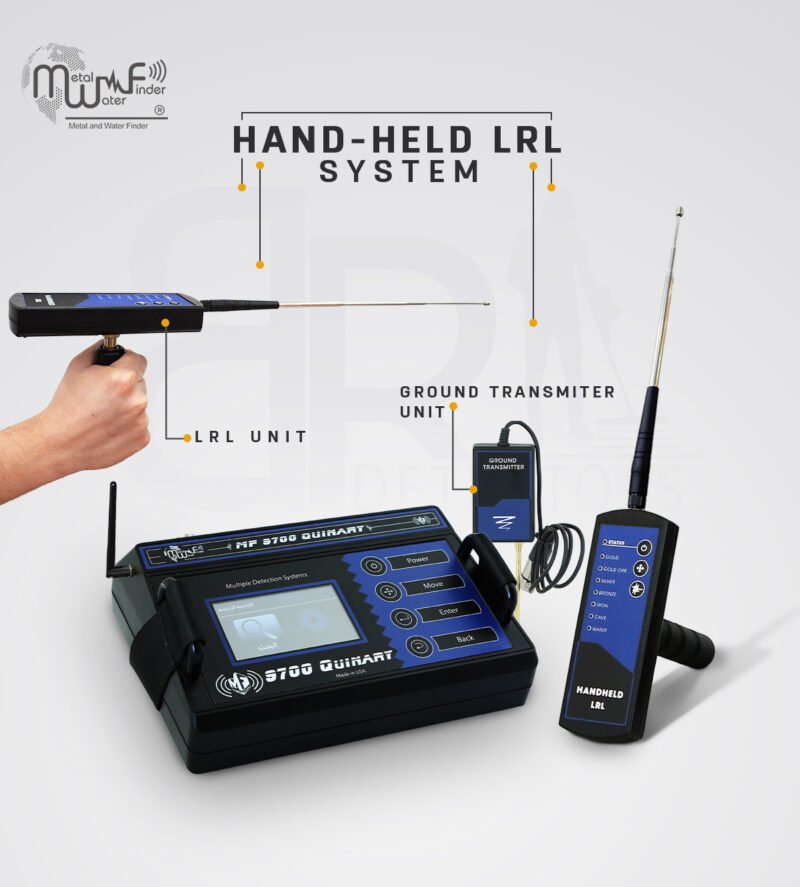
The fascination with gold hunting has never faded, and with advancements in technology, prospectors today have access to sophisticated equipment designed to make the search more efficient. One of the most talked-about tools is the long range gold detector machine, which claims to locate treasures at impressive depths and distances. But how effective are these machines really, and what should you know before investing in one?
This article takes a closer look at the performance, features, and real-world usability of long-range detectors, with insights into professional-grade models like the MF 9700 Q that are shaping modern gold prospecting.
Understanding the Capabilities of Long Range Detectors
At their core, long-range detectors are engineered to cover vast search areas and locate targets from several meters to even kilometers away. Unlike traditional VLF or pulse induction detectors that focus on sensitivity and precision in smaller areas, these machines prioritize distance and penetration. This makes them particularly useful in desert landscapes, wide open plains, or regions where gold deposits may lie deep beneath the surface.
When choosing a long range gold detector machine, it’s important to understand that effectiveness depends on multiple factors: soil mineralization, the machine’s frequency technology, the skill of the operator, and even environmental conditions like humidity. While manufacturers often advertise extreme ranges, real-world use often shows that accuracy improves when combined with prospecting knowledge and proper calibration.
Why the MF 9700 Q Stands Out
Among long-range detectors available today, the MF 9700 Q has gained a reputation for its versatility and reliability. It combines advanced sensor technology with user-friendly controls, making it suitable for both experienced prospectors and those new to gold hunting.
What sets it apart is its multi-system operation, which allows users to switch between long-range scanning and other modes that improve accuracy at closer distances. This flexibility ensures that you aren’t just covering large areas blindly—you also have the ability to home in on signals with greater precision once a promising spot is identified. For prospectors working in regions like the Middle East or Africa, where terrain and soil conditions vary greatly, the MF 9700 Q offers an adaptable solution.
Effectiveness in Real Prospecting Conditions
The big question most prospectors ask is: “Do long-range detectors really work?” The answer is yes—but with caveats. These machines are most effective when used in conjunction with field knowledge. For example, if you’re aware of historical gold mining sites or geological signs of gold presence, a long-range detector can dramatically cut down the time it takes to locate potential deposits.
However, these detectors are not magic wands. They require proper tuning, patience, and sometimes confirmation from a secondary detector for shallow or small targets. Many seasoned prospectors use them as the first step in exploration, scanning large areas to narrow down potential hotspots before moving in with a more sensitive, ground-level detector.
Balancing Range and Accuracy
One of the ongoing debates around long-range machines is whether their wide search capabilities compromise accuracy. The truth is that these detectors trade some precision for broader coverage. They may pick up signals that turn out to be false positives, requiring extra effort to confirm targets. Yet, for professionals who are mapping large territories, the benefits outweigh the drawbacks.
The key to maximizing effectiveness is understanding the balance between range and accuracy. High-quality models like the MF 9700 Q address this by incorporating multiple detection systems, which provide both reach and the ability to refine results. In practice, this dual approach can save time, fuel, and resources in the field.
Durability and Practical Considerations
Gold hunting often involves rugged conditions—harsh climates, rocky landscapes, and long hours outdoors. This means a detector must be more than just technically capable; it also has to be durable and practical. Long-range machines are typically built with strong materials and ergonomic designs, but their effectiveness depends on consistent power supply, stable calibration, and the operator’s stamina.
Prospectors should also consider portability. While long-range detectors are generally larger and heavier than standard models, advancements in design have made them easier to transport and operate. Features like rechargeable batteries, digital displays, and weather-resistant casings make modern detectors far more practical than earlier generations.
Who Should Invest in a Long Range Detector?
Not every prospector needs a long-range machine. If your focus is on riverbeds, small creeks, or shallow soils, a high-frequency detector may serve you better. Long-range detectors, on the other hand, are best suited for professionals covering expansive areas where traditional detectors would take too much time.
For explorers working in regions with known large deposits or in projects where efficiency and coverage are priorities, these machines can be game-changers. The ability to quickly identify promising areas for further exploration can save months of effort and dramatically increase the odds of success.
Conclusion
So, how effective is a long range gold detector machine? The answer lies in how it’s used. While they may not provide pinpoint accuracy for every target, they excel at scanning vast areas, detecting deep signals, and guiding prospectors toward valuable hotspots. For those willing to learn how to use them effectively, machines like the MF 9700 Q prove that long-range detection is not just marketing hype—it’s a practical tool that, when combined with knowledge and persistence, can lead to remarkable discoveries.